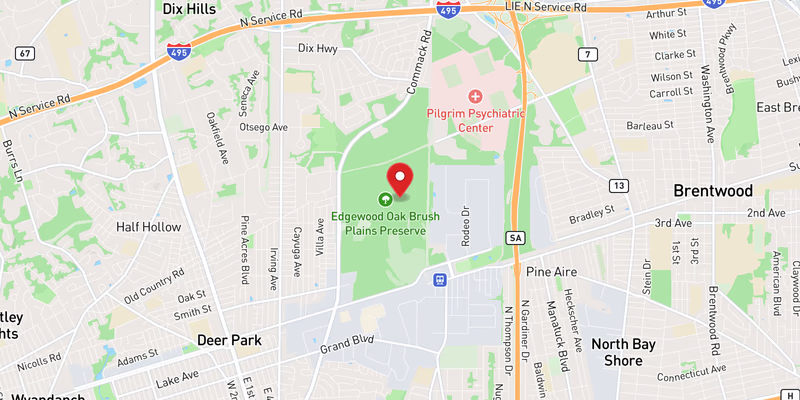
 Incident location, Long Island
What Happened
Two vehicles were involved in a property damage collision on the Sagtikos State Parkway on Friday, April 17, 2026, according to available incident reports. The crash was classified as moderate in severity, though specific details about the time of day, exact location along the parkway, and circumstances leading to the collision have not yet been released by authorities.
The incident appears to have resulted in damage to both vehicles involved, though the extent of that damage remains unclear. No information has been provided regarding whether any occupants sustained injuries, though the classification as a property damage accident suggests that serious injuries were likely not reported at the scene.
Details about the types of vehicles involved, the direction of travel, and the specific cause of the collision have not been made available. It is also unclear whether weather conditions, road surface issues, or other environmental factors may have contributed to the crash.
The responding agencies and the duration of any traffic impacts resulting from the incident have not been specified in initial reports. Emergency responders likely cleared the scene without extended lane closures, as is typical for property damage accidents that do not involve injuries or major vehicle damage requiring heavy towing equipment.
No information has been released regarding whether citations were issued to any drivers involved in the collision. The investigation status and whether any traffic violations or contributing factors have been identified remains unclear at this time.
Location & Road Context
The Sagtikos State Parkway serves as a crucial north-south corridor connecting the Southern State Parkway to the Northern State Parkway, running through both Suffolk and Nassau counties. The parkway carries significant daily traffic volumes as commuters and travelers use it to navigate between Long Island’s major east-west thoroughfares.
This incident represents part of a concerning pattern of accidents on the Sagtikos State Parkway in recent days. According to traffic incident data, the roadway has recorded 30 incidents in available databases, with multiple crashes occurring in just the past week. On the same day as this property damage accident, the parkway experienced at least two other incidents, including one involving personal injuries. Additional accidents were reported on April 16 and April 14, suggesting the stretch of roadway may be experiencing heightened safety challenges.
The frequency of recent incidents on the Sagtikos State Parkway raises questions about potential contributing factors such as increased traffic volume, road conditions, or driver behavior patterns. The parkway’s design, with its relatively narrow lanes and limited shoulder space in certain sections, can contribute to accident severity when collisions do occur.
Broader Impact
The cluster of accidents on the Sagtikos State Parkway in recent days, including multiple incidents on April 17 alone, highlights the ongoing safety challenges faced by this vital Long Island transportation corridor. With commuter traffic patterns potentially returning to pre-pandemic levels and continued development throughout the region increasing vehicle volume, the parkway’s role as a connector between major routes makes any disruption significant for regional traffic flow.
The property damage nature of this particular incident, while less severe than crashes involving injuries, still represents the type of collision that can create traffic backups and secondary accident risks as drivers navigate around emergency vehicles and damaged cars. Even minor accidents on busy parkways can have ripple effects throughout the regional transportation network, particularly during peak travel times when alternative routes may already be operating at capacity.
Long Island’s parkway system, including the Sagtikos, was designed decades ago for different traffic patterns and vehicle volumes than what exists today. The recent concentration of incidents serves as a reminder of the ongoing need for driver vigilance and appropriate following distances, especially on roadways where traffic moves at highway speeds but with less margin for error than found on larger interstate highways.