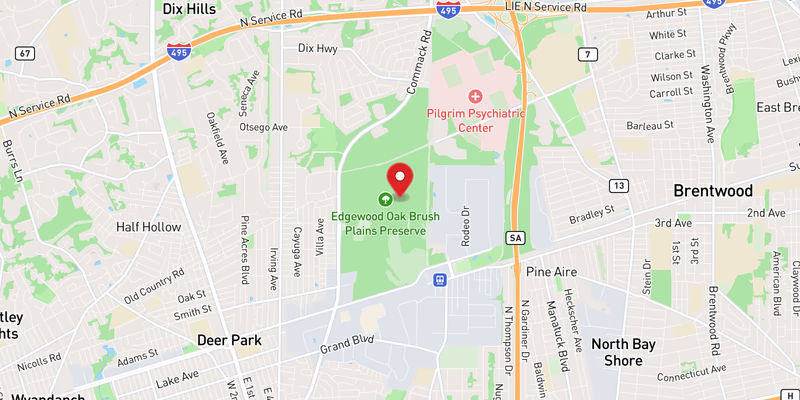
 Incident location, Long Island
What Happened
A Long Island Rail Road train struck debris Wednesday morning in one of the East River tunnels, causing widespread delays and service disruptions across eight of the railroad’s 11 branches during the morning commute. The debris that caused the collision originated from an earlier incident involving a New Jersey Transit train that had become disabled in the same tunnel, according to a service alert issued by LIRR officials.
The accident effectively shut down all train service into Penn Station, with LIRR officials confirming that no trains were able to reach the Manhattan terminal following the incident. The disruption forced transportation officials to implement emergency rerouting procedures, with affected trains being diverted to Grand Central Terminal as an alternative destination. Some scheduled trains faced significant delays while others were canceled entirely as the railroad worked to manage the crisis.
Transportation officials deployed a rescue train to the disabled LIRR train to safely evacuate passengers who were stranded in the tunnel following the collision with debris. The rescue operation required passengers to be transferred from the stuck train to the rescue vehicle, which then transported them away from the incident scene. Officials indicated that the evacuated commuters would be taken to either Long Island City or Grand Central Terminal to continue their journeys.
The service disruption affected a substantial portion of the LIRR network, with eight of the system’s eleven branches experiencing delays, cancellations, or rerouting. This represented nearly three-quarters of the entire Long Island Rail Road system being impacted by the single incident in the East River tunnel. The railroad issued active alerts for all affected branches to keep passengers informed of the ongoing service changes.
The incident created a cascade effect throughout the morning rush hour, as thousands of commuters found their regular travel patterns disrupted. With Penn Station completely inaccessible to LIRR trains, the railroad’s capacity was significantly reduced, forcing passengers to seek alternative routes or destinations. The diversion of trains to Grand Central Terminal, while providing some relief, could not fully compensate for the loss of Penn Station service.
Officials worked to coordinate the emergency response while managing the complex logistics of rerouting multiple train lines simultaneously. The rescue operation in the tunnel required careful coordination to ensure passenger safety while working in the confined underground environment. The East River tunnel system, which serves as a critical link between Long Island and Manhattan, became the focal point of major transportation disruption affecting tens of thousands of daily commuters.
Location & Road Context
The East River tunnels represent one of the most critical transportation arteries connecting Long Island to Manhattan, carrying thousands of commuters daily during peak travel periods. These underwater passages serve both LIRR and NJ Transit trains, making them essential infrastructure for the regional transportation network. The tunnels’ strategic importance means that any disruption can have far-reaching effects across multiple transportation systems and affect commuters from various regions.
The incident’s location in the tunnel system created particular challenges for emergency response and service restoration, as the underground environment limits access and complicates rescue operations. The shared use of these tunnels by both LIRR and NJ Transit trains demonstrates the interconnected nature of the regional rail system, where problems affecting one operator can quickly impact others.
Broader Impact
This incident highlights the vulnerability of shared tunnel infrastructure, where the failure of one train system can create debris that affects other operators using the same route. The East River tunnels’ critical role in regional transportation means that relatively minor incidents can escalate into major service disruptions affecting thousands of commuters across multiple transit systems, demonstrating the need for robust coordination between different railroad operators sharing infrastructure.