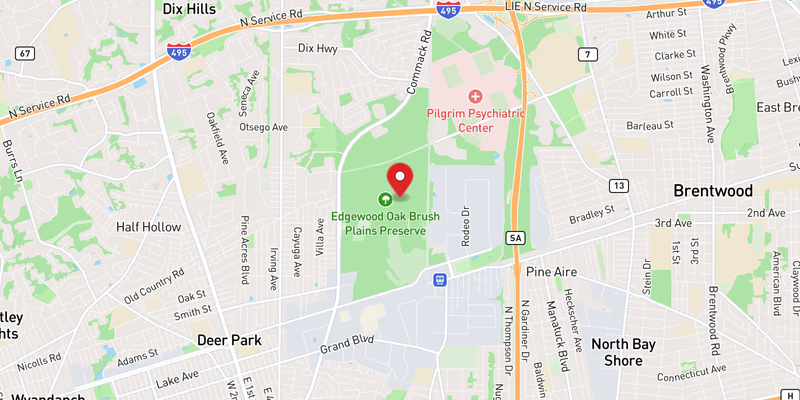
 Incident location, Long Island
What Happened
A Long Island Rail Road train struck debris in an East River tunnel during Wednesday morning’s peak commute on April 29, 2026, leaving the train disabled and blocking critical infrastructure leading to Penn Station. The incident occurred after the LIRR train encountered remnants left behind by a previously disabled NJ Transit vehicle that had become stuck earlier in the morning, according to LIRR service alerts and transportation officials.
According to the Metropolitan Transportation Authority, the debris originated from an NJ Transit train that became stuck in the tunnel during the early morning hours. While crews successfully removed the NJ Transit train, the subsequent collision with the remaining debris left an LIRR train stationary inside the tunnel, creating a complete blockage of the vital transit artery. The MTA reported that no trains are currently entering Penn Station as a result of the incident.
The collision triggered widespread cancellations and reroutes across eight of the LIRR’s 11 branches, according to transportation officials. Many services are being diverted to Grand Central Terminal or sent back to Long Island City to accommodate the disrupted rail traffic. The Long Beach Branch is among the most heavily impacted routes, with several morning trips canceled or significantly delayed, officials reported.
Rescue operations were immediately launched to assist commuters trapped on the disabled LIRR train inside the tunnel. Transportation officials stated that a rescue train arrived on-site to offload passengers from the stranded vehicle. According to authorities, some passengers were transferred to an occupied passing train while others were moved to an empty train that pulled up alongside the disabled equipment to facilitate the evacuation process.
Emergency crews and fire departments responded to the scene as riders expressed significant dissatisfaction with the situation, according to social media reports. Passengers waiting for evacuations or rerouting instructions took to social platforms to voice mounting frustration with the delays. “Another dreamy morning on the #LIRR … it is like they are on strike already,” said one commuter on social media, reflecting the widespread irritation among affected riders.
SkyFOX aerial footage confirmed the presence of the disabled train in the tunnel area as emergency personnel arrived to manage the situation. While the original NJ Transit issue was resolved earlier in the morning, LIRR officials have not yet provided a specific timeline for the removal of the second disabled train or the full restoration of service to Penn Station, leaving thousands of commuters in uncertainty about their travel plans.
Location & Road Context
The East River tunnel serves as a critical transportation artery connecting Long Island to Manhattan, carrying hundreds of thousands of commuters daily during peak travel periods. The tunnel infrastructure represents one of the most vital links in the regional transportation network, with any disruption causing cascading effects across the entire LIRR system. The incident occurred in the section of tunnel that provides direct access to Penn Station, Manhattan’s primary rail hub.
The timing of the incident during Wednesday morning’s peak commute period maximized the impact on commuters, as this represents one of the highest-volume travel times for the LIRR system. The East River crossing is particularly vulnerable to service disruptions due to limited alternative routing options, making any blockage in this corridor especially problematic for maintaining system-wide operations.
Broader Impact
The incident highlights the vulnerability of aging tunnel infrastructure to cascading failures, where one disabled train’s debris can trigger secondary incidents affecting thousands of additional commuters. The disruption across eight of eleven LIRR branches demonstrates how a single point of failure in critical infrastructure can ripple throughout an entire regional transportation network, particularly during peak travel periods when capacity constraints leave little room for contingency operations.