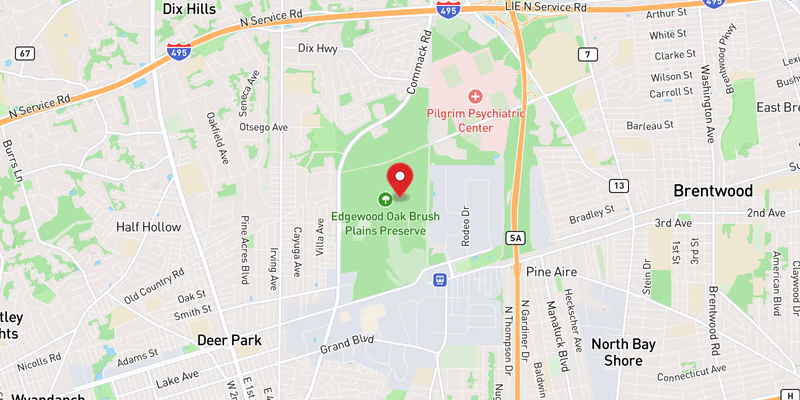
 Incident location, Long Island
What Happened
A vehicle became disabled on Long Island roads Friday, May 1, 2026, creating what authorities classified as a moderate traffic incident. The specific nature of the vehicle breakdown and exact location on Long Island have not been confirmed by officials at this time.
Details surrounding the circumstances that led to the vehicle becoming disabled remain under investigation. It is unclear whether mechanical failure, accident damage, or other factors contributed to the vehicle’s inability to continue operating normally. The type of vehicle involved has not been specified by responding agencies.
Emergency responders likely arrived at the scene to assist with the disabled vehicle situation, though specific agencies involved have not been confirmed. Traffic management measures may have been implemented to ensure safe passage around the disabled vehicle while recovery efforts took place.
The incident was classified with moderate severity, suggesting it created notable but manageable disruption to traffic flow in the affected area. This classification typically indicates the situation required official response and may have caused temporary delays for motorists traveling through the area.
No information has been released regarding injuries to vehicle occupants or other individuals who may have been involved in the incident. The duration of the traffic disruption and timeline for clearing the disabled vehicle from the roadway have not been specified by authorities.
Towing services were presumably called to remove the disabled vehicle from its location, though details about recovery operations remain unconfirmed. The incident appears to have been resolved without escalating to a more serious traffic emergency or multi-vehicle collision.
Location & Road Context
The incident occurred somewhere on Long Island’s extensive road network, which includes major highways such as the Long Island Expressway, Northern State Parkway, and Southern State Parkway, as well as numerous local roads and secondary routes. Without specific location details, the exact roadway affected cannot be determined.
Long Island’s road system handles significant daily traffic volume, with hundreds of thousands of vehicles traveling on major arteries during peak periods. Disabled vehicles on these busy routes can quickly create backups and require prompt response from emergency services to maintain traffic flow and ensure motorist safety. The moderate severity classification suggests the incident occurred on a roadway with sufficient traffic volume to warrant official attention and response.
Broader Impact
Disabled vehicle incidents are among the most common causes of traffic disruption on Long Island’s road network. These situations often require coordination between local police, highway departments, and towing services to ensure safe and efficient clearance while minimizing impact on surrounding traffic flow.
The moderate severity designation indicates this particular incident created meaningful but manageable disruption, likely requiring temporary traffic management measures such as lane restrictions or shoulder use limitations. Such incidents serve as reminders for motorists to maintain adequate following distances and remain alert for unexpected obstacles or emergency vehicles responding to roadway incidents.
Regular vehicle maintenance and pre-trip inspections can help reduce the likelihood of mechanical failures that lead to disabled vehicle situations. When vehicles do become disabled, prompt movement to the shoulder or safest available location helps minimize traffic disruption and safety risks for all roadway users.
The timing of this incident on a Friday may have coincided with increased traffic volumes as commuters and weekend travelers utilized Long Island’s road network. Weekend travel patterns often see heightened activity on routes leading to recreational destinations, making efficient incident response particularly important for maintaining traffic flow.
Recovery operations for disabled vehicles typically involve assessment of the mechanical issue, determination of repair feasibility at the scene, and coordination of appropriate towing services when on-site repairs are not possible. The process requires careful attention to traffic management and worker safety protocols throughout the duration of roadside operations.