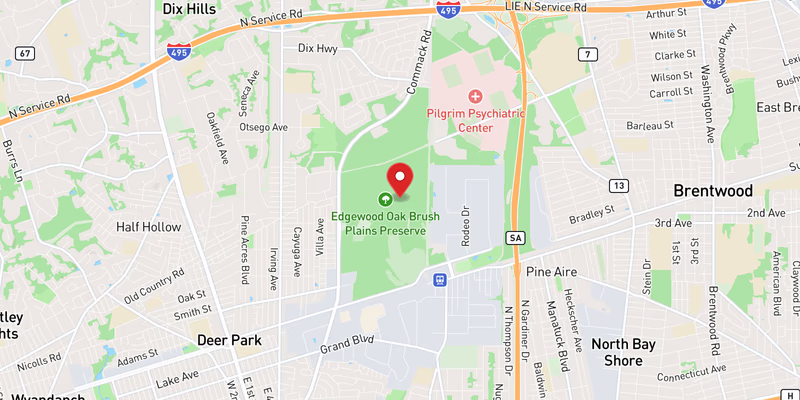
 Incident location, Long Island
What Happened
A truck driver’s daughter is publicly challenging the police account of a traffic accident involving her father’s vehicle and a teenage bicyclist that occurred in Miller Place on Wednesday, March 25, 2026. The dispute centers on conflicting narratives about how the moderate-severity crash unfolded, according to reports.
The collision involved a truck and a teen cyclist, though specific details about the exact location within Miller Place, the time of the incident, and the precise circumstances leading to the crash remain unclear as the daughter’s account differs from the official police version. The severity has been classified as moderate, suggesting injuries occurred but were not life-threatening, though the extent of any injuries to either the truck driver or the teenage bicyclist has not been specified.
The truck driver’s daughter, whose name has not been released, is reportedly disputing key elements of how police have characterized the incident. Her challenge to the official account suggests there may be significant discrepancies between witness testimony, physical evidence interpretation, or the sequence of events as described by law enforcement versus what the family believes actually occurred.
The teenage bicyclist’s condition and identity have not been publicly disclosed, and it remains unclear whether the cyclist was transported to a hospital for treatment or the nature of any injuries sustained in the collision. Similarly, details about the truck driver’s condition following the crash have not been reported.
The dispute highlights potential complications in the investigation, as conflicting accounts from involved parties and their families can complicate efforts to determine fault and reconstruct the exact sequence of events. Police investigations typically rely on physical evidence, witness statements, and interviews with those involved to piece together what happened in traffic accidents.
No information has been released regarding whether citations were issued, if any charges are pending, or what specific aspects of the police account the daughter is challenging. The disagreement could involve factors such as speed, right-of-way, road positioning, or other critical details that determine liability in traffic incidents.
Location & Road Context
Miller Place is located in Suffolk County on Long Island’s North Shore, situated between Port Jefferson and Rocky Point. The community features a mix of residential neighborhoods and commercial areas, with several main thoroughfares that carry both local and regional traffic.
The specific roadway where the truck-bicycle collision occurred has not been identified, making it difficult to assess traffic patterns, speed limits, or infrastructure conditions that may have contributed to the incident. Miller Place roads range from busy commercial strips to quieter residential streets, each presenting different challenges for vehicle-bicycle interactions and varying levels of cycling infrastructure and safety features.
Investigation & Legal Proceedings
The status of the police investigation remains unclear given the ongoing dispute over the official account. The daughter’s public challenge to the police version suggests the case may still be under active investigation or that the family is considering legal action to contest the findings.
No information has been released regarding whether any citations were issued to either party, if criminal charges are being considered, or what specific evidence forms the basis of the police account that is being disputed. The disagreement could potentially impact any legal proceedings or insurance claims related to the incident, particularly if the dispute involves questions of fault or liability that could affect the outcome of civil or criminal cases.
Broader Impact
Disputes between families and law enforcement over traffic accident investigations highlight the importance of thorough evidence collection and transparent communication during the investigative process. When official accounts are challenged by those directly affected, it can indicate potential gaps in witness interviews, physical evidence analysis, or communication between investigators and involved parties, emphasizing the need for comprehensive accident reconstruction in cases involving vulnerable road users like cyclists.