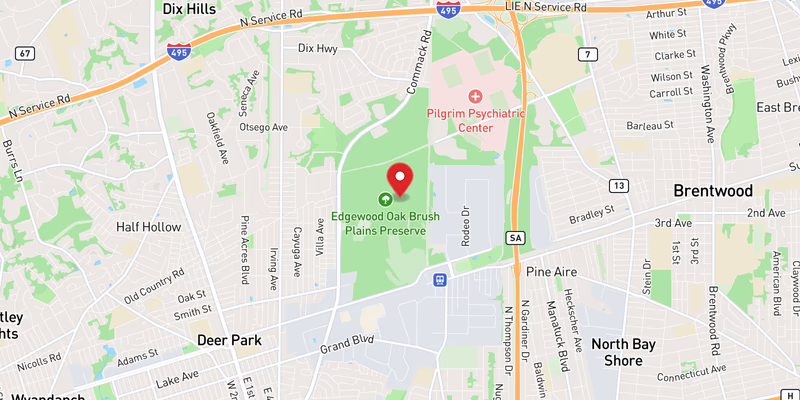
 Incident location, Long Island
What Happened
A vehicle fire occurred on Long Island on Friday, May 1, 2026, according to initial reports. The incident was classified as moderate in severity, though specific details about the circumstances leading to the blaze remain unclear at this time.
The exact location of the vehicle fire within Long Island has not been specified in preliminary reports. Emergency responders likely received the call during daylight hours on Friday, though the precise time of the incident has not been confirmed by authorities.
Details about the type of vehicle involved in the fire have not been released. It remains unknown whether the vehicle was a passenger car, truck, motorcycle, or commercial vehicle. The cause of the fire – whether mechanical failure, collision-related, or from another source – has not been determined in early reports.
Information about any injuries resulting from the incident has not been provided. It is unclear whether the vehicle’s occupants, if any, were able to safely exit before the fire spread, or if emergency medical services were required at the scene.
The response from local fire departments and emergency services has not been detailed in initial reports. Standard protocol for vehicle fires typically involves fire suppression crews, police for traffic control, and potentially hazardous materials teams depending on the severity and location of the blaze.
Traffic impacts from the incident, if any, have not been reported. Depending on the location – whether on a major highway, local road, or parking area – the fire could have affected traffic flow and required road closures or detours while emergency crews worked to extinguish the flames and clear the scene.
Location & Road Context
The incident occurred somewhere within Long Island’s extensive road network, which includes major highways such as the Long Island Expressway, Northern State Parkway, Southern State Parkway, and numerous local roads serving Nassau and Suffolk counties. Without specific location details, the exact road conditions and traffic patterns at the incident site cannot be determined.
Long Island’s roadways carry heavy traffic volumes, particularly during weekday commuting hours and weekend travel periods. Vehicle fires can pose significant safety hazards and traffic disruptions, especially on major arterial roads where emergency vehicle access may be challenging and lane closures can create extensive backups.
Investigation & Legal Proceedings
The cause of the vehicle fire remains under investigation. Depending on the circumstances discovered during the investigation, various factors could be examined including mechanical failure, electrical problems, fuel system issues, or potential collision damage that may have preceded the fire.
If the investigation reveals any traffic violations, negligence, or other factors that contributed to the incident, appropriate charges could be filed. However, many vehicle fires result from mechanical failures or other non-criminal causes that do not lead to legal proceedings beyond standard incident documentation.
Broader Impact
Vehicle fires, while not uncommon, can create environmental concerns depending on their location and severity. If the fire occurred near water sources, storm drains, or environmentally sensitive areas, cleanup efforts may be required to address any fuel, oil, or other automotive fluids that could have spilled during the incident. Fire suppression foam and other firefighting chemicals used to extinguish vehicle fires may also require proper disposal and environmental assessment, particularly if the incident occurred on or near roadway drainage systems that connect to local waterways.
The moderate severity classification suggests the incident was contained without major complications, though the full extent of property damage and any environmental impact will likely be assessed as part of the ongoing investigation. Local authorities typically coordinate with environmental agencies when vehicle fires occur in sensitive locations or when significant fluid spills are involved.