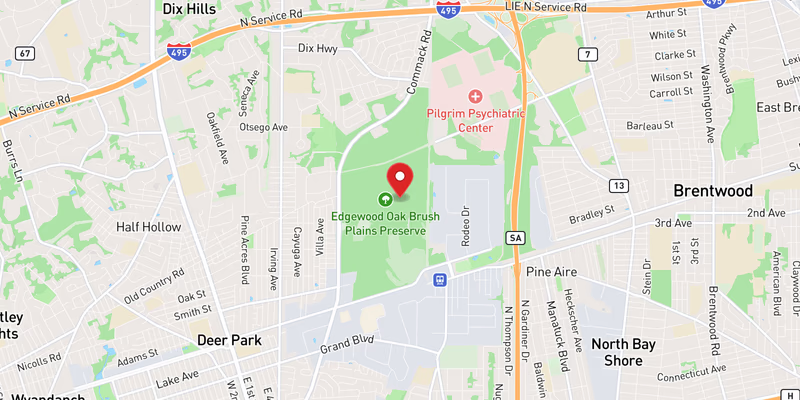
 Incident location, Long Island
What Happened
A two-alarm electrical fire in the East River Tunnel between Manhattan and Queens disrupted Long Island Rail Road and NJ Transit service Thursday, forcing LIRR trains to divert from Penn Station to Grand Central Terminal while suspending NJ Transit service into Manhattan entirely. The fire began around 11 a.m. and was extinguished by 1 p.m., according to sources who spoke with the New York Daily News.
The electrical fire started a few hundred feet into tube No. 4 of the four-tube East River Tunnel, specifically at a set of switch tracks that allow trains to access both tube No. 3 and tube No. 4, sources told the Daily News. The blaze damaged a key junction connecting the tunnel to Penn Station and sent smoke into tracks 18, 19, 20 and 21 at the north end of the station.
The Fire Department of New York deployed 26 units with 84 fire and EMS personnel to respond to the incident, according to an FDNY spokesperson. No injuries were reported during the emergency response or evacuation procedures.
As of Thursday afternoon, neither tube No. 3 nor tube No. 4 were operational following the fire. With Amtrak currently rebuilding tube No. 2, only one track in tube No. 1 remained in service. MTA sources told the Daily News it was unlikely normal service would be restored in time for the evening rush hour.
Long Island Rail Road service in Manhattan continued operating exclusively through Grand Central Terminal Thursday afternoon. NJ Transit, which uses the East River Tunnel to store trains from the morning rush hour in Queens’ Sunnyside Yard, diverted all service to Hoboken Terminal on the other side of the Hudson River.
Amtrak passenger service through Penn Station had resumed by early Thursday afternoon, though with significant delays, the Daily News reported.
Location & Road Context
The East River Tunnel system connects Manhattan and Queens through four tubes that carry Amtrak, Long Island Rail Road, and NJ Transit trains. The tunnel serves as a critical transportation link for commuters traveling between Long Island, New Jersey, and Manhattan, with Penn Station serving as the primary hub for these services.
The affected switch tracks in tube No. 4 are essential infrastructure that allows trains to move between different tunnel tubes, providing operational flexibility during normal service and emergencies. With Amtrak’s ongoing reconstruction of tube No. 2, the fire significantly reduced the tunnel system’s capacity.
Broader Impact
The fire highlighted the vulnerability of the aging East River Tunnel infrastructure, particularly as Amtrak continues major rehabilitation work on tube No. 2. With only one fully operational tube remaining after the incident, the transportation disruption affected thousands of Long Island and New Jersey commuters during both the midday period and evening rush hour, forcing many to seek alternative routes through Grand Central Terminal or Hoboken.