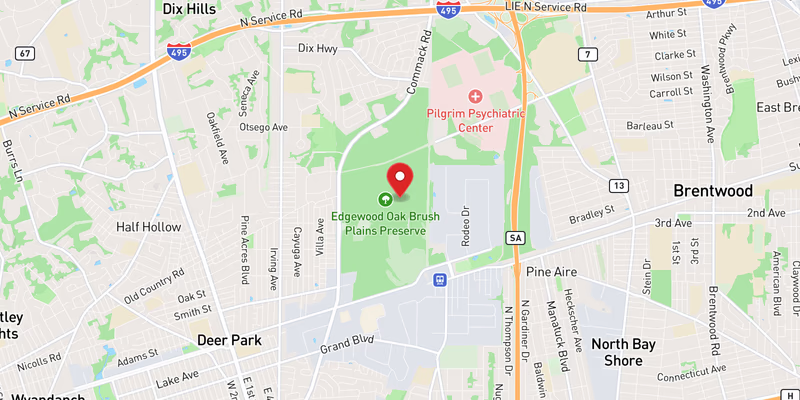
 Incident location, Long Island
What Happened
A track fire in the East River Tunnel forced widespread LIRR train cancellations and diversions from New York Penn Station on Thursday, May 14, 2026, with service impacts expected to continue through Friday morning. The fire was reported to the FDNY after 11 a.m., according to NBC New York, prompting dozens of firefighters to respond to the scene.
Firefighters extinguished the flames in approximately two hours, though the smell remained noticeable throughout Penn Station for hours afterward, the FDNY said. No injuries were reported from the incident.
Amtrak, which owns Penn Station and its infrastructure, identified the blaze as an electrical fire inside the East River Tunnel that caused significant damage to the tube. The fire directly impacted two train lines but ultimately knocked out all eastbound LIRR service from Penn Station entirely.
Only one eastbound train departed Penn Station after 11 a.m. - the 4:20 to Ronkonkoma - with passengers asked to transfer at Jamaica Station for other destinations. All other LIRR trains were either canceled or diverted to Grand Central Terminal, according to NBC New York.
The MTA posted on social media that service remained suspended as of 8 p.m. Thursday, warning that there “may be” delays, reroutes and cancellations during Friday’s morning commute. Passengers heading to Long Island were advised to use Grand Central instead, though trains were expected to be crowded due to the service changes.
LIRR riders could also board at Atlantic Terminal in Brooklyn as an alternative. The MTA implemented cross-honoring of LIRR tickets on multiple subway lines, including the E line between 34th Street-Penn Station, Forest Hills-71 Avenue, Kew Gardens-Union Turnpike, and Jamaica Center-Parsons/Archer; the 4, 5, 6, and 7 lines at Grand Central-42nd Street; and the 7 line at Woodside-61st Street.
Location & Road Context
The East River Tunnel is a critical rail link connecting Manhattan to Long Island, carrying thousands of LIRR commuters daily. Penn Station serves as the primary Manhattan terminal for LIRR service, making the tunnel fire’s impact particularly disruptive for evening rush hour traffic.
The incident forced commuters to seek alternative routes through Grand Central Terminal and Atlantic Terminal in Brooklyn, creating crowding and delays across the regional rail network.
Broader Impact
NJ Transit and Amtrak continued operating from Penn Station using different tunnels, though both services experienced delays and disruptions. Some NJ Transit passengers received mobile app alerts suggesting PATH trains as a better alternative given the cancellations. Amtrak Northeast posted on X that “all traffic traveling southbound into New York (NYP) is temporarily stopped” due to municipal services requirements.
The timing of the fire during Thursday’s afternoon rush hour created significant commuter disruptions, with frustrated crowds of passengers forced to navigate alternative routes and overcrowded trains at Grand Central and Atlantic Terminal.