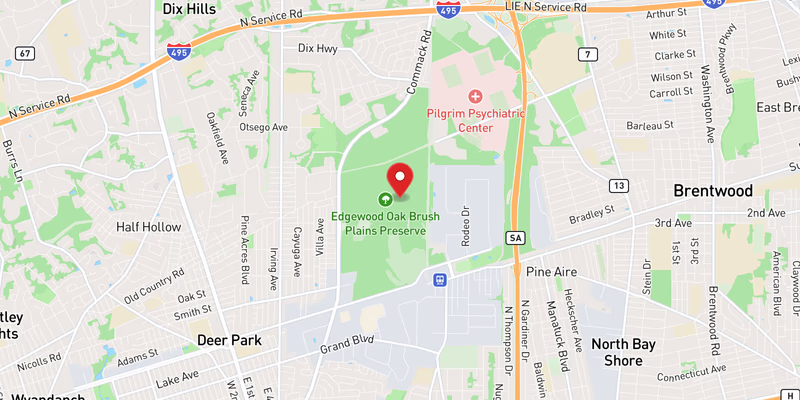
 Incident location, Long Island
What Happened
A track fire in the East River Tunnel at New York Penn Station on Thursday forced extensive Long Island Rail Road train cancellations and delays that extended more than 24 hours into Friday evening, according to NBC New York. The cancellations began just after 11 a.m. Thursday, with trains to and from Long Island unable to operate at the Manhattan transit hub.
Amtrak, which owns Penn Station and its infrastructure, identified the incident as an electrical fire inside the East River Tunnel that caused significant damage to the tube. The fire was extinguished in approximately two hours Thursday, but its impact continued to disrupt service through Friday evening. Two train lines were directly impacted by the fire, though all eastbound service was ultimately knocked out entirely.
There was no westbound LIRR service to the Manhattan transit hub Friday, while limited service operated going to Long Island as Amtrak crews continued repairs. LIRR trains coming from Long Island were rerouted to Grand Central or Atlantic Terminal, or terminated at Jamaica Station. Long Island-bound service was severely reduced for Friday’s evening rush hour, with fewer than a dozen trains leaving Penn Station between 3 p.m. and 8 p.m.
The disruption extended beyond LIRR service to affect NJ Transit operations as well. All Midtown Direct service was diverted to Hoboken for the remainder of Friday, impacting all lines except the Atlantic City line. Rail tickets were being cross-honored at Newark Penn Station, Hoboken, and 33rd Street in Manhattan.
No injuries were reported as a result of Thursday’s fire. The MTA messaged all customers using the Train Time app Friday to provide details about the service changes. Service was not expected to return to normal until Saturday, though potential strike action could further impact LIRR operations.
Location & Road Context
The East River Tunnel connects Penn Station in Manhattan to Long Island, serving as a critical transportation artery for tens of thousands of daily commuters. The tunnel carries LIRR trains under the East River between Manhattan and Queens, making it essential infrastructure for Long Island’s connection to Manhattan’s business districts.
Penn Station serves as the primary Manhattan terminal for LIRR service, handling the majority of rush-hour trains that transport Long Island residents to and from their jobs in the city. The station’s central role in the regional transit network means that disruptions at this location have cascading effects throughout the LIRR system.
Broader Impact
The extended service disruption highlights the vulnerability of aging rail infrastructure in the New York metropolitan area, where a single point of failure can affect hundreds of thousands of commuters across multiple transit systems. The incident forced commuters to seek alternative routes through Grand Central and Atlantic Terminal, putting additional strain on subway and bus systems as passengers sought alternative ways to reach their destinations.