What Happened
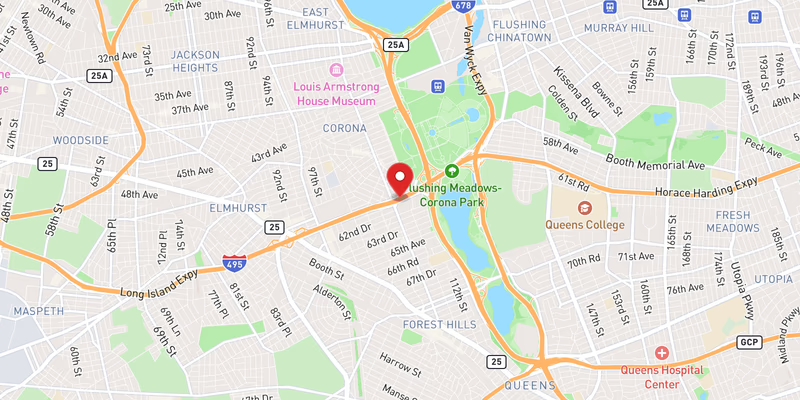
Flooding was reported on the eastbound Long Island Expressway (I-495) in Queens County on Monday, August 3, 2026. The official incident record classified the event as minor, and all lanes were reported open at the time. No specific exit number, mile marker, or cross street was included in the incident data, and no injuries were reported in connection with this flooding event.
The incident was not isolated. Our local database recorded at least three separate minor flooding events on I-495 on the same date, as well as a moderate crash on I-495 and a separate minor crash on I-495 logged the same morning. The clustering of these events points to deteriorating wet-weather conditions across the expressway corridor on August 3. Additional activity on the road that day included a disabled truck and scheduled road sweeping, according to our incident records.
No official quotes, responding agency identifications, or cause-of-flooding details were included in the source record at the time of publication.
Location & Road Context
The Long Island Expressway (I-495) is one of the most heavily traveled highways in the United States, running from the Queens–Midtown Tunnel through Nassau and Suffolk counties. The Queens segment, where this flooding was reported, represents the western gateway to Long Island and frequently experiences drainage challenges during heavy rainfall events due to its age and urban density.
Our database shows 2,044 recorded incidents on I-495, making it the most incident-dense road tracked on Long Island Traffic. Queens County accounts for 224 recorded incidents in our local database. On high-volume commuter corridors like this one, even minor standing water can contribute to secondary crashes, particularly when multiple flooding zones develop simultaneously along the same route.
Broader Impact
The simultaneous appearance of multiple flooding incidents and crashes on I-495 on August 3 underscores the compounding risk that wet pavement creates on high-speed limited-access highways. Drivers encountering standing water on the LIE — even where lanes remain technically open — face hydroplaning risk that standard speed limits do not account for. Reducing speed and increasing following distance in these conditions is especially critical on a corridor where our records show nearly 2,100 incidents to date.