What Happened
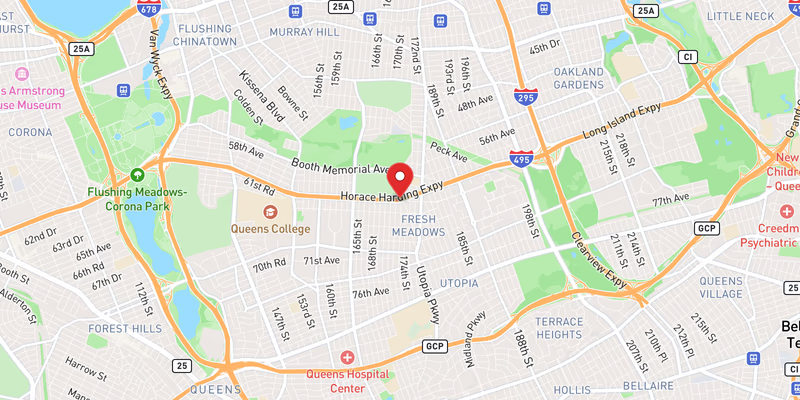
A minor crash on eastbound I-495 in Queens County blocked two left lanes on Thursday, August 13, 2026, snarling traffic on one of the New York metropolitan area’s most heavily traveled highways. Details on the number of vehicles involved, the cause of the collision, and whether any occupants sustained injuries were not immediately available in the initial incident record. The lane closures went into effect following the crash, affecting the flow of eastbound traffic moving out of New York City and into Nassau and Suffolk counties.
No fatalities or serious injuries were reported in connection with the collision. The event was logged as minor in severity. Police have not yet confirmed additional specifics, including the exact mile marker of the crash or the agencies that responded to the scene.
Location & Road Context
Interstate 495 — known locally as the Long Island Expressway — is one of the most congested highways in the United States, running roughly 71 miles from the Queens–Midtown Tunnel east to Riverhead, Suffolk County. The Queens segment in particular serves as a critical artery for commuters, freight, and regional travelers entering and exiting Long Island daily. Our I-495 incident database contains 2,246 recorded incidents, reflecting the corridor’s persistent safety challenges. Queens County accounts for 256 recorded accidents in our local tracking database.
The August 13 crash was far from an isolated event on this stretch. The same day saw at least one additional crash on I-495 along with multiple active roadwork and construction zones logged along the expressway — a combination that routinely compresses available lanes and reduces driver reaction time. In the days immediately prior, I-495 recorded a moderate crash on August 12 and several minor collisions across consecutive days, underscoring the frequency of incidents along this route.
Broader Impact
The simultaneous presence of crash scenes and active construction zones on I-495 on August 13 created compounding hazard conditions for eastbound drivers. Work zones reduce lane width and posted speed limits, and when a collision occurs in or near an active construction corridor, the combined lane restrictions can push backups well beyond the immediate incident zone — a pattern that plays out repeatedly on this expressway throughout the summer travel season.