What Happened
Four House lawmakers, including Long Island Rep. Laura Gillen, introduced the Stop Auto Fraud Act of 2026 on Thursday, September 3, 2026, a bipartisan bill that would make staging a car crash and filing fraudulent insurance claims a federal crime. Newsday reported the bill Thursday afternoon. Gillen (D-Rockville Centre) co-sponsored the legislation with Rep. Josh Gottheimer (D-NJ), Rep. Troy Nehls (R-TX), and Rep. Vince Fong (R-CA).
Under the bill, a conviction for staging a crash carries up to 10 years in prison plus fines. If the fabricated collision results in serious injuries, the ceiling rises to 20 years plus fines. A staged crash that produces a fatality could bring a life sentence and additional financial penalties.
“Long Islanders pay some of the highest car insurance rates in the country and ‘crash for cash’ schemes on our roads are driving rates even higher,” Gillen said in a statement. “When fraudsters stage car wrecks to scam their way to huge payouts, they’re putting lives at risk and forcing responsible drivers to bear the costs.”
The bill targets schemes in which drivers, passengers, and co-conspirators fabricate accidents to collect large insurance payouts, often with the involvement of connected law firms and compliant medical providers. Law enforcement investigators say the operations extend well beyond the people physically in the crashes, pulling in recruiters, medical providers, and attorneys who can convert a deliberately caused collision into thousands of dollars in insurance payments. Some schemes have widened to include allegedly staged falls from construction sites and slip-and-fall injuries on sidewalks.
The legislation has drawn support from major insurance providers and trade organizations, along with trucking, busing, and vehicle rental groups, according to Newsday.
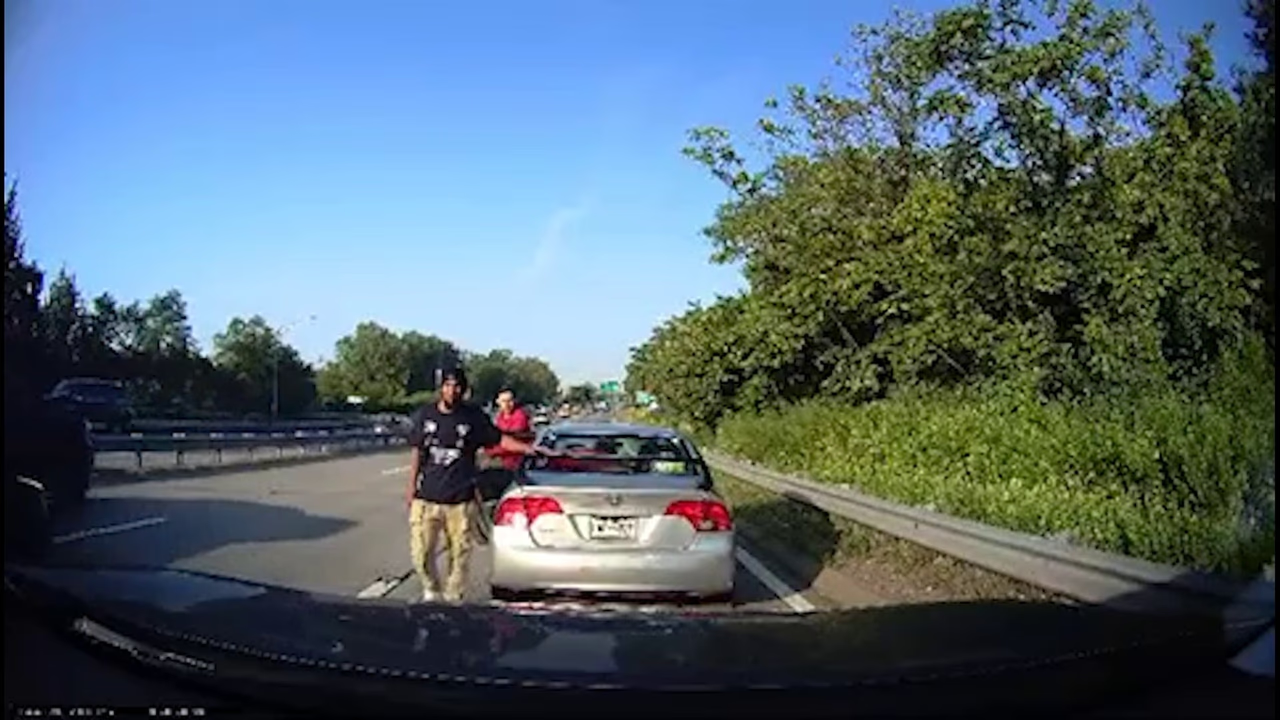
The bill’s introduction follows a specific Long Island-connected incident: on the morning of August 24, 2024, Victor Murillo drove a silver Honda Civic on the Belt Parkway, cut off a Long Island woman, and then stopped in front of her, forcing her car to collide with his. The Queens County District Attorney’s Office credited dashcam footage for exposing a related scheme in which suspects cut off a Queens woman on the Belt Parkway and then rammed her vehicle in reverse, video that went viral. Two Brooklyn men tied to those staged-accident schemes were sentenced to prison last month.
Location & Road Context
The Belt Parkway incident on August 24, 2024, is the specific Long Island-area crash most directly tied to the bill’s momentum. The Belt Parkway runs through Queens and Nassau County and is a major commuter corridor between Long Island and New York City. Staged crashes on high-traffic, multi-lane parkways are harder for victims to avoid and produce insurance claims with elevated injury valuations.
For road conditions and incidents on the Belt Parkway and other Long Island routes, see our roads coverage and accidents archive.
Investigation & Legal Proceedings
The State Department of Financial Services received 43,000 suspicious reports related to auto insurance fraud in 2025, an 80% increase from five years earlier, according to Gov. Kathy Hochul. State lawmakers earlier in 2026 passed changes that cap damages in fraud cases and allow prosecutors to seek criminal penalties against any individual involved in an alleged scheme, not just the drivers in the staged vehicle.
New York’s existing state-level changes and the proposed federal bill represent separate tracks. The Stop Auto Fraud Act of 2026 would give federal prosecutors jurisdiction, adding a potential 10-to-life sentencing range on top of state penalties depending on outcome. As of September 3, 2026, the bill had been introduced in the House but had not yet been assigned a committee hearing date.